NSE Revises F&O Trading Timings from August 3: What Every Investor and Trader Needs to Know
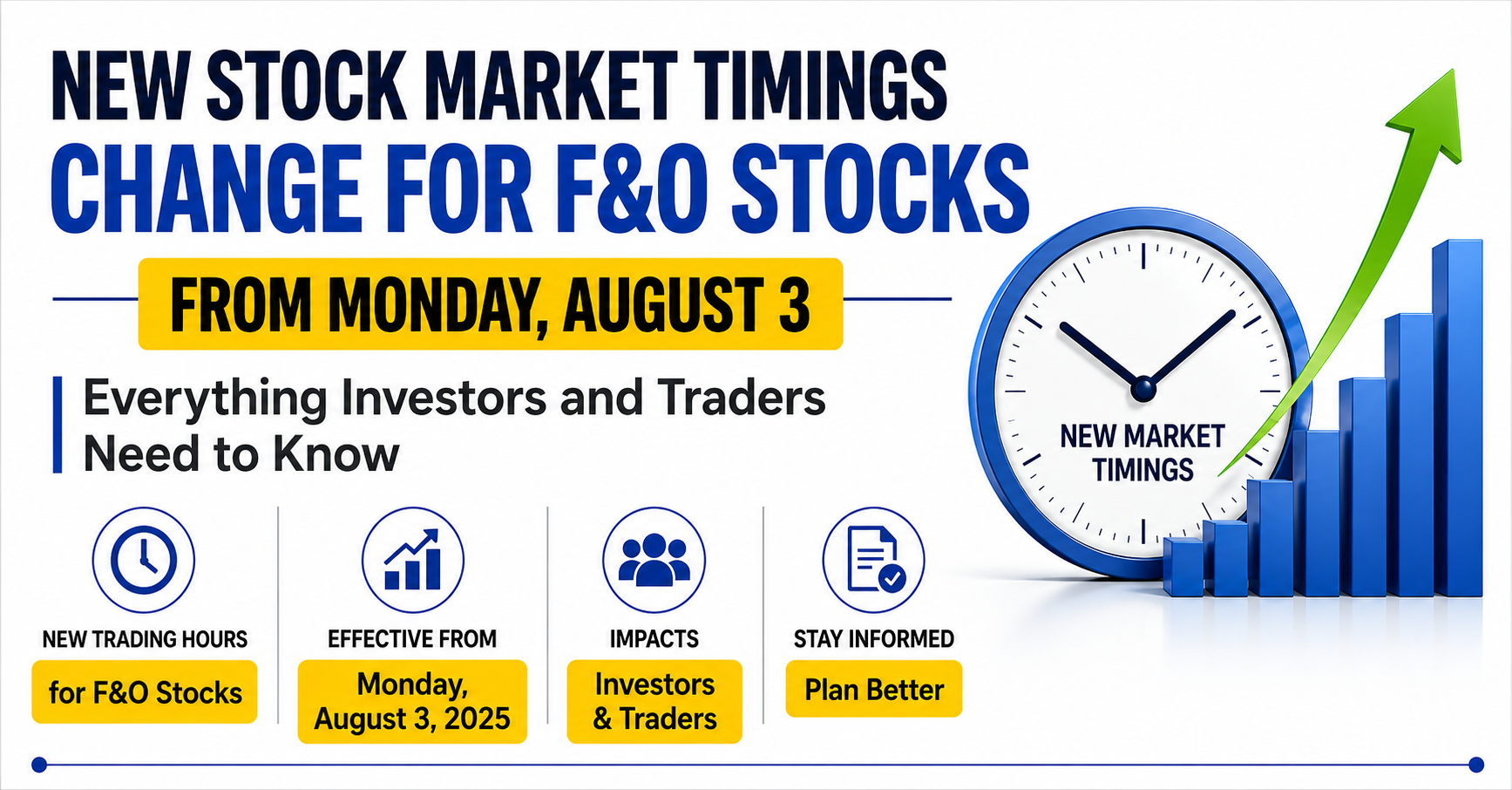
The NSE has revised the trading timings for the Futures & Options (F&O) segment, effective Monday, August 3, extending trading by 10 minutes while keeping equity cash market hours unchanged. Here's what the new schedule means for traders, investors, and how it could impact market participation and trading strategies.
By IPO Master
NSE Revises F&O Trading Timings from August 3: What Every Investor and Trader Needs to Know
The National Stock Exchange (NSE) has introduced an important operational change for market participants by revising the trading timings of its Futures & Options (F&O) segment, effective Monday, August 3. While the change is relatively small in terms of duration, it is expected to improve market efficiency and provide traders with greater flexibility during the trading session.
If you actively trade derivatives or follow the Indian stock market closely, understanding this change is essential.
What Has Changed?
Under the revised schedule, the equity cash market will continue to operate from 9:15 AM to 3:30 PM, with no changes to its trading hours.
However, the Futures & Options (F&O) segment will now remain open until 3:40 PM, extending trading by 10 additional minutes.
This revision aims to provide better alignment with market operations and enhance the trading experience for participants in the derivatives market.
Why Is NSE Extending F&O Trading Hours?
The extension may appear modest, but it serves several practical purposes for traders and investors.
Better Position Management
The additional trading window gives market participants more time to manage open derivative positions before market close, especially during periods of heightened volatility.
Improved Market Efficiency
Longer trading hours can contribute to smoother price discovery and provide traders with an opportunity to react to late-session developments more effectively.
Greater Flexibility
Institutional investors, professional traders, and retail participants alike will benefit from extra time to execute trades and hedge their portfolios.
Enhanced Trading Experience
The revised timings are expected to improve overall market participation by allowing traders to make more informed decisions toward the end of the trading session.
What Does This Mean for Investors?
For long-term investors who primarily buy and hold equities, the impact will be minimal since the cash market timings remain unchanged.
However, for active traders dealing in index futures, stock futures, options, and hedging strategies, the extended trading window provides an additional opportunity to adjust positions before the market closes.
Market participants should also ensure that any automated trading systems, order schedules, or trading routines are updated to reflect the revised timings.
Who Should Pay Attention?
This change is particularly relevant for:
Derivatives traders
Options buyers and sellers
Futures traders
Intraday traders
Portfolio managers
Hedgers
Institutional investors
Active retail traders
Anyone participating in the F&O segment should familiarize themselves with the revised trading schedule before the new timings take effect.
Preparing for the New Trading Hours
As the revised schedule comes into effect, traders should review their trading plans and risk management strategies.
Brokerage platforms, algorithmic trading systems, and order management processes should be checked to ensure they align with the updated market hours. Investors should also stay informed about any further operational announcements from exchanges and regulators.
Final Thoughts
The extension of NSE's F&O trading hours marks another step toward improving the efficiency and flexibility of India's capital markets. Although the change adds only ten minutes to the trading session, those extra minutes can be valuable for active market participants managing risk, executing trades, and responding to late-session market movements.
For long-term investors, the change is largely operational. For derivatives traders, however, it introduces additional opportunities to optimize trading strategies and manage positions more effectively.
As always, staying informed about exchange updates and adapting your trading approach accordingly is an essential part of successful investing.
Use the list on the right to open the next post.