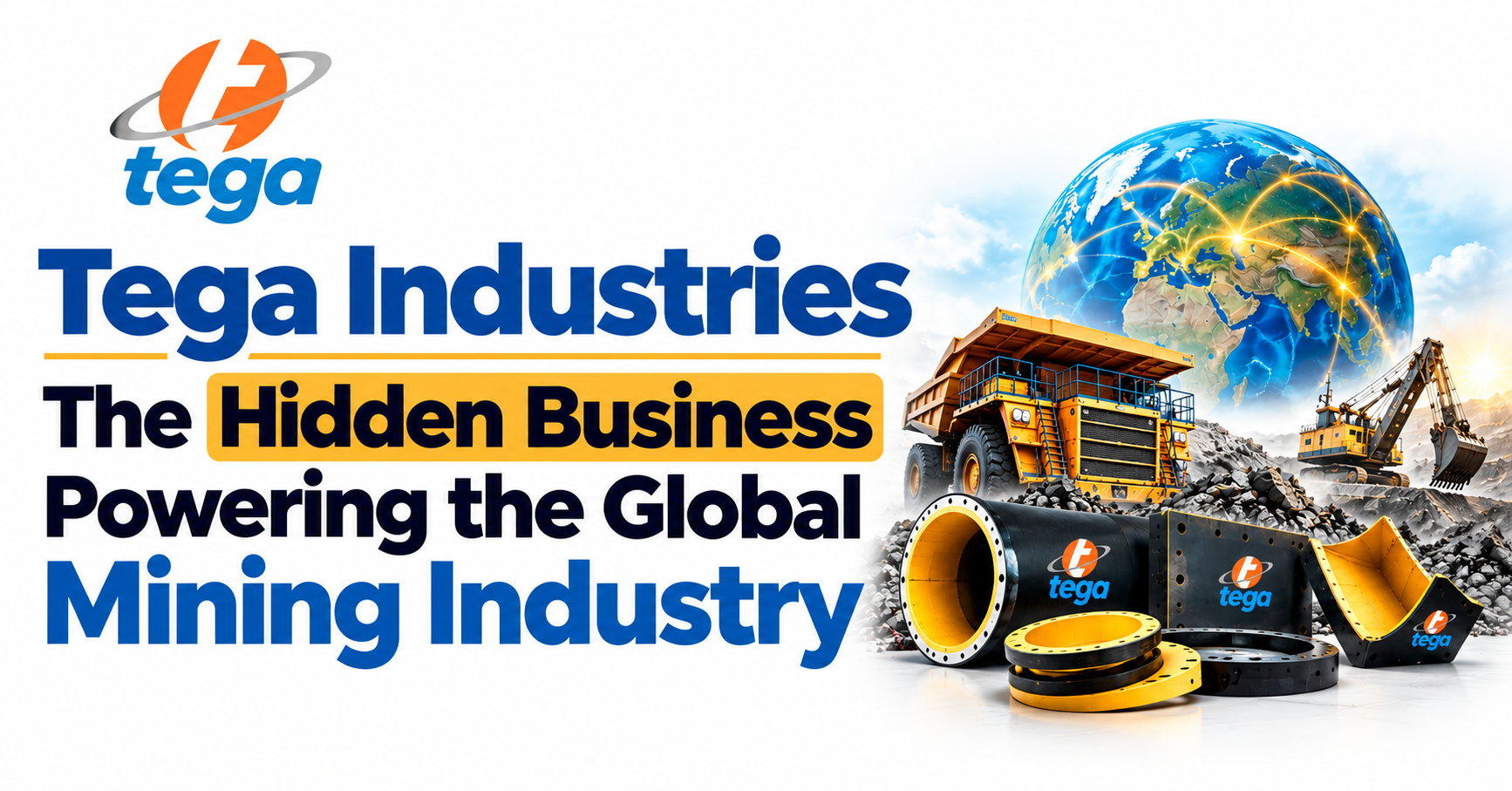
Tega Industries: The Hidden Business Powering the Global Mining Industry
Tega Industries plays an important role in the global mining industry by providing specialised equipment and wear-resistant solutions used in mineral processing. Explore how its mining technology, industrial products and global presence support mining operations and create business opportunities.
By IPO Master
Tega Industries: The Hidden Business Powering the Global Mining Industry
Beyond the mines themselves, a specialised industrial business is helping mining companies process more ore, improve efficiency and maintain operations.
Introduction: The Business Behind Every Mine
When investors think about the mining industry, they generally focus on companies producing gold, copper, iron ore and other minerals. However, extracting minerals is only one part of the process. Before these resources can be used, mined rock must be crushed, ground and processed to separate valuable minerals from the surrounding material.
This creates demand for specialised equipment and consumables that mining companies need to maintain their operations. One Indian company operating in this space is Tega Industries Ltd.
Founded in Kolkata in 1976, Tega Industries has developed a global presence in products used in mining, mineral processing and material handling. Its business focuses on specialised components that help mining operations run efficiently. Rather than depending directly on the price of a particular mineral, the company's performance is closely linked to mining activity, ore-processing volumes and demand for its products.
Understanding Tega Industries' Business Model
Tega's business can be understood through three major areas.
1. Mining Consumables
The company manufactures products such as mill liners, wear-resistant components, screening products and conveyor components. These products operate in demanding industrial environments and experience continuous wear.
Mill liners, for example, protect grinding mills from damage while supporting the process of breaking ore into smaller particles. Since these components wear out over time, mining customers require replacements, creating recurring demand.
2. Mineral Processing Equipment
Through its equipment business, Tega provides solutions used in crushing, screening, material handling and mineral beneficiation. These products support mining companies in building or upgrading processing facilities.
Unlike recurring consumables, equipment orders can be larger and less predictable because they depend on project approvals, capital expenditure and delivery schedules.
3. Global Customer Relationships
Tega serves customers across multiple international markets. Its specialised products, technical support and understanding of customer requirements help it compete in a business where reliability and operating performance matter.
For mining customers, equipment downtime can be expensive. This creates an incentive to use products that meet their technical requirements and deliver consistent performance.
The Molycop Acquisition: A Major Strategic Shift
One of the most significant developments in Tega Industries' growth journey has been its acquisition of Molycop, a global manufacturer of grinding media used in mineral processing. The transaction was completed on June 1, 2026.
Grinding media consists of the balls or other media used inside mills to break ore into smaller particles. Before the acquisition, Tega had a strong presence in products such as mill liners that support the grinding process. Molycop adds another important component of the same process.
The strategic rationale is to offer mining customers a broader range of complementary products and build a more comprehensive mineral-processing solutions business.
The combined platform also creates opportunities to expand customer relationships, improve procurement efficiency and increase cross-selling across geographical markets.
However, the acquisition also brings integration challenges and a substantially greater financing burden. The long-term benefits will depend on whether the company can realise expected synergies, integrate operations successfully and reduce debt over time.
What Could Drive Future Growth?
1. Rising Demand for Mineral Processing
Copper and other industrial metals are important inputs for power infrastructure, electrical equipment, transportation and manufacturing. Demand for these resources can encourage mining companies to invest in production and processing capacity.
Tega's opportunity comes from supplying the consumables and equipment required to process ore. However, demand depends on actual mining investment and operating volumes, not simply on rising metal prices.
2. Recurring Demand for Consumables
Specialised consumables wear out during normal mining operations and require replacement. This creates a potentially more recurring revenue stream than large equipment projects.
Customer-specific designs, technical expertise and established relationships can also make it difficult for competitors to replace an existing supplier immediately.
3. International Expansion
A wider manufacturing and distribution network can help the company serve customers in major mining regions and improve its ability to compete for international contracts.
The challenge is to convert geographical expansion into better margins and stronger cash generation.
4. Synergies from Molycop
The acquisition gives Tega an opportunity to sell complementary products to a wider customer base. Management has also outlined a plan to pursue cost savings and operational efficiencies.
Investors should monitor whether these benefits become visible in reported financial results rather than relying only on future projections.
Financial Performance: Growth Needs to Translate into Returns
For FY2025–26, Tega Industries reported consolidated total income of approximately ₹1,774 crore and profit after tax of approximately ₹227 crore in its annual financial performance highlights.
These figures provide a starting point for understanding the company's pre- and post-acquisition growth trajectory. However, the acquisition of Molycop changes the scale and financial structure of the business, making comparisons with earlier years more complex.
Investors should pay particular attention to the following:
Revenue growth: Is the expanded business generating stronger sales?
Operating margins: Are improvements in scale translating into sustainable profitability?
Debt reduction: Is the company making progress towards its stated deleveraging objectives?
Return on capital: Can the enlarged asset base generate adequate returns?
Cash flow: Is the company generating sufficient cash to fund operations, capital expenditure and debt repayment?
A larger business does not automatically mean a more profitable investment. The quality of earnings and the return generated on the capital invested remain critical.
Key Risks Investors Should Understand
Acquisition and integration risk: Combining businesses across countries, systems and customer markets can take time and may cost more than expected.
Debt burden: Acquisition-related borrowing increases financial obligations and makes cash generation particularly important.
Mining industry cycles: Lower mining activity or delayed projects can reduce demand for consumables and equipment.
Execution risk: Capacity expansion, new manufacturing facilities and equipment contracts must be completed on schedule to deliver expected returns.
Valuation risk: Even if the business performs well, an expensive stock valuation can limit future investment returns.
Conclusion: A Specialised Business with a Bigger Ambition
Tega Industries represents an interesting part of the global mining value chain. Its business is built around products that help mining companies process minerals and maintain operational efficiency.
The acquisition of Molycop has expanded its strategic reach and created opportunities to offer a broader range of solutions. At the same time, the increased financial commitments mean that execution, profitability and debt reduction will be important factors to monitor.
For investors, the key question is whether Tega can transform its expanded global presence into stronger earnings, sustainable cash flows and attractive returns on capital.
The real story is not just about supplying products to mines. It is about building a specialised global business around the essential processes that make mineral production possible.
Beyond the mines themselves, a specialised industrial business is helping mining companies process more ore, improve efficiency and maintain operations.
Introduction: The Business Behind Every Mine
When investors think about the mining industry, they generally focus on companies producing gold, copper, iron ore and other minerals. However, extracting minerals is only one part of the process. Before these resources can be used, mined rock must be crushed, ground and processed to separate valuable minerals from the surrounding material.
This creates demand for specialised equipment and consumables that mining companies need to maintain their operations. One Indian company operating in this space is Tega Industries Ltd.
Founded in Kolkata in 1976, Tega Industries has developed a global presence in products used in mining, mineral processing and material handling. Its business focuses on specialised components that help mining operations run efficiently. Rather than depending directly on the price of a particular mineral, the company's performance is closely linked to mining activity, ore-processing volumes and demand for its products.
Understanding Tega Industries' Business Model
Tega's business can be understood through three major areas.
1. Mining Consumables
The company manufactures products such as mill liners, wear-resistant components, screening products and conveyor components. These products operate in demanding industrial environments and experience continuous wear.
Mill liners, for example, protect grinding mills from damage while supporting the process of breaking ore into smaller particles. Since these components wear out over time, mining customers require replacements, creating recurring demand.
2. Mineral Processing Equipment
Through its equipment business, Tega provides solutions used in crushing, screening, material handling and mineral beneficiation. These products support mining companies in building or upgrading processing facilities.
Unlike recurring consumables, equipment orders can be larger and less predictable because they depend on project approvals, capital expenditure and delivery schedules.
3. Global Customer Relationships
Tega serves customers across multiple international markets. Its specialised products, technical support and understanding of customer requirements help it compete in a business where reliability and operating performance matter.
For mining customers, equipment downtime can be expensive. This creates an incentive to use products that meet their technical requirements and deliver consistent performance.
The Molycop Acquisition: A Major Strategic Shift
One of the most significant developments in Tega Industries' growth journey has been its acquisition of Molycop, a global manufacturer of grinding media used in mineral processing. The transaction was completed on June 1, 2026.
Grinding media consists of the balls or other media used inside mills to break ore into smaller particles. Before the acquisition, Tega had a strong presence in products such as mill liners that support the grinding process. Molycop adds another important component of the same process.
The strategic rationale is to offer mining customers a broader range of complementary products and build a more comprehensive mineral-processing solutions business.
The combined platform also creates opportunities to expand customer relationships, improve procurement efficiency and increase cross-selling across geographical markets.
However, the acquisition also brings integration challenges and a substantially greater financing burden. The long-term benefits will depend on whether the company can realise expected synergies, integrate operations successfully and reduce debt over time.
What Could Drive Future Growth?
1. Rising Demand for Mineral Processing
Copper and other industrial metals are important inputs for power infrastructure, electrical equipment, transportation and manufacturing. Demand for these resources can encourage mining companies to invest in production and processing capacity.
Tega's opportunity comes from supplying the consumables and equipment required to process ore. However, demand depends on actual mining investment and operating volumes, not simply on rising metal prices.
2. Recurring Demand for Consumables
Specialised consumables wear out during normal mining operations and require replacement. This creates a potentially more recurring revenue stream than large equipment projects.
Customer-specific designs, technical expertise and established relationships can also make it difficult for competitors to replace an existing supplier immediately.
3. International Expansion
A wider manufacturing and distribution network can help the company serve customers in major mining regions and improve its ability to compete for international contracts.
The challenge is to convert geographical expansion into better margins and stronger cash generation.
4. Synergies from Molycop
The acquisition gives Tega an opportunity to sell complementary products to a wider customer base. Management has also outlined a plan to pursue cost savings and operational efficiencies.
Investors should monitor whether these benefits become visible in reported financial results rather than relying only on future projections.
Financial Performance: Growth Needs to Translate into Returns
For FY2025–26, Tega Industries reported consolidated total income of approximately ₹1,774 crore and profit after tax of approximately ₹227 crore in its annual financial performance highlights.
These figures provide a starting point for understanding the company's pre- and post-acquisition growth trajectory. However, the acquisition of Molycop changes the scale and financial structure of the business, making comparisons with earlier years more complex.
Investors should pay particular attention to the following:
Revenue growth: Is the expanded business generating stronger sales?
Operating margins: Are improvements in scale translating into sustainable profitability?
Debt reduction: Is the company making progress towards its stated deleveraging objectives?
Return on capital: Can the enlarged asset base generate adequate returns?
Cash flow: Is the company generating sufficient cash to fund operations, capital expenditure and debt repayment?
A larger business does not automatically mean a more profitable investment. The quality of earnings and the return generated on the capital invested remain critical.
Key Risks Investors Should Understand
Acquisition and integration risk: Combining businesses across countries, systems and customer markets can take time and may cost more than expected.
Debt burden: Acquisition-related borrowing increases financial obligations and makes cash generation particularly important.
Mining industry cycles: Lower mining activity or delayed projects can reduce demand for consumables and equipment.
Execution risk: Capacity expansion, new manufacturing facilities and equipment contracts must be completed on schedule to deliver expected returns.
Valuation risk: Even if the business performs well, an expensive stock valuation can limit future investment returns.
Conclusion: A Specialised Business with a Bigger Ambition
Tega Industries represents an interesting part of the global mining value chain. Its business is built around products that help mining companies process minerals and maintain operational efficiency.
The acquisition of Molycop has expanded its strategic reach and created opportunities to offer a broader range of solutions. At the same time, the increased financial commitments mean that execution, profitability and debt reduction will be important factors to monitor.
For investors, the key question is whether Tega can transform its expanded global presence into stronger earnings, sustainable cash flows and attractive returns on capital.
The real story is not just about supplying products to mines. It is about building a specialised global business around the essential processes that make mineral production possible.
Disclaimer: This article is for educational purposes only and should not be construed as investment advice or a recommendation to buy or sell any security.
Use the list on the right to open the next post.